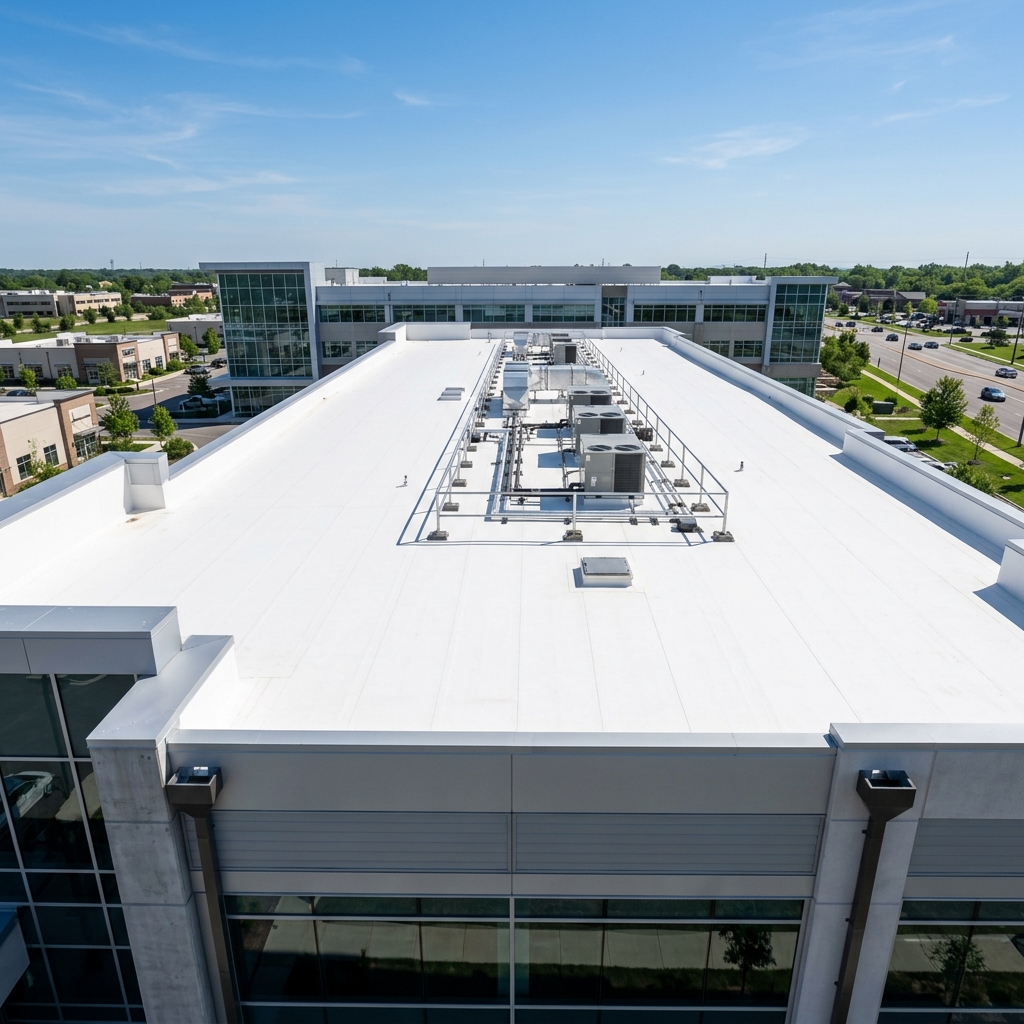
Flat and low-slope roofs are common on commercial buildings, warehouses, and shopping centers across the DFW Metroplex. While highly functional, flat roofs require consistent maintenance to prevent water damage. Unlike sloped roofs, flat roofs rely on drains and scuppers to shed water. If these are blocked, standing water can accumulate, accelerating membrane decay and causing structural leaks. Here are our top flat roof maintenance tips.
1. Eliminate Ponding Water
Ponding water is defined as standing water that remains on a roof for more than 48 hours after rain. Ponding water places significant weight load on your decking and degrades roofing materials. In DFW, hot summer temperatures cause standing water to boil, baking the underlying TPO or tar layers. Correcting deck slopes or installing roof drains is essential to prevent ponding.
2. Clear Drains, Gutters, and Scuppers
Blocked drains are the primary cause of commercial roof leaks. Leaves, wind-blown dirt, and bird nesting materials can accumulate in scuppers and downspouts. Inspect and clear these drainage channels at least twice a year to ensure optimal water flow.
"Ponding water left on a flat roof for more than 48 hours is a major threat, causing material decay and structural leaks. Keep drains clear to protect your building."
3. Restore with Silicone Elastomeric Coatings
If your commercial flat roof is structurally sound but starting to leak at the seams, you may not need a full replacement. Applying a high-solids silicone roof coating over your existing membrane creates a seamless, monolithic water barrier that seals leaks and restores reflectivity, extending your roof's lifespan.
Keep your commercial facility dry and secure. Contact the commercial specialists at 3-R Roofing Company to request a flat roof inspection today.